Beyond the sanctum
Around Melukote (Melkote)
A hill temple above the town, two ancient tanks, a gateway nobody ever finished, and a lake half an hour out — what else there is to see once darshana is done.
On foot
On the hill and in the town
All of these are within a walk of the sanctum, and all of them fit between the morning and evening darshana.
Yoga Narasimha Temple
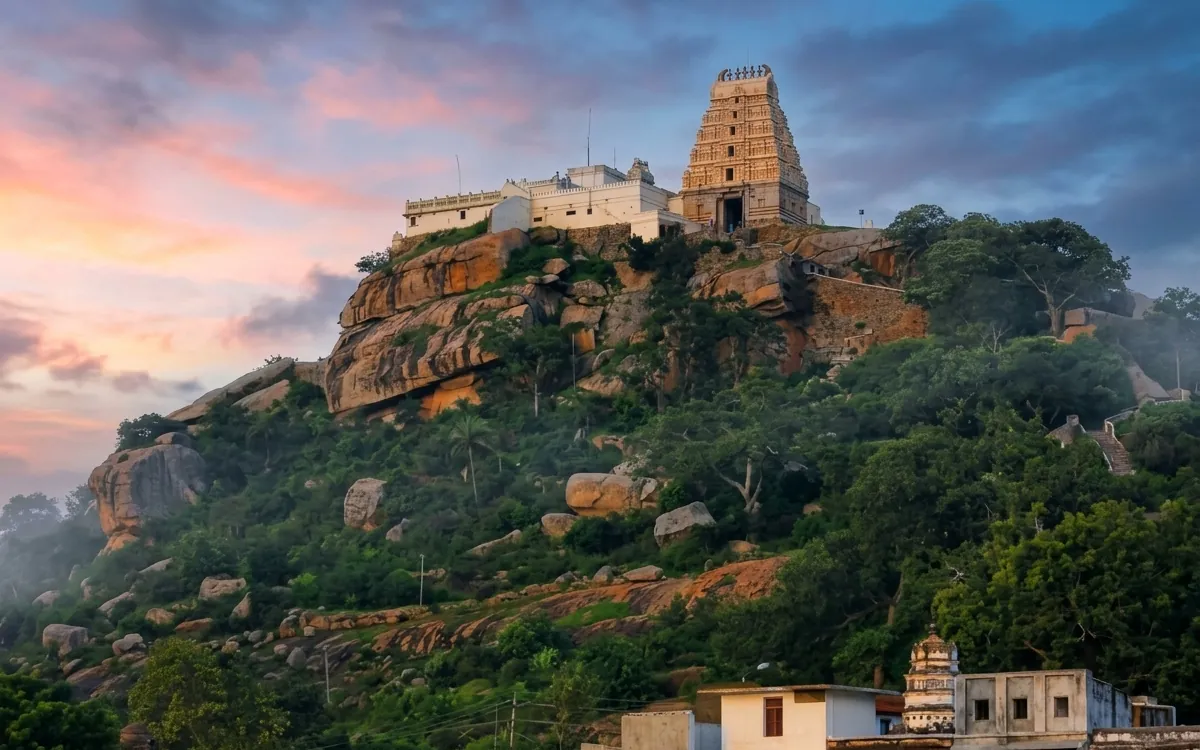
Also the hill temple, atop Yadugiri
Above the town · Road partway, then the steps
Narasimha seated in the meditative posture, in a temple on the summit of the rock the town is built under. The climb is what most people remember of Melukote: the steps are steep and irregular, and the whole valley opens out behind you as you go.
It keeps its own hours and opens two hours after the sanctum, so check the timings before setting out. Climb early or late — the stone is unbearable at midday, and the monkeys on the steps are bold.
The Kalyani
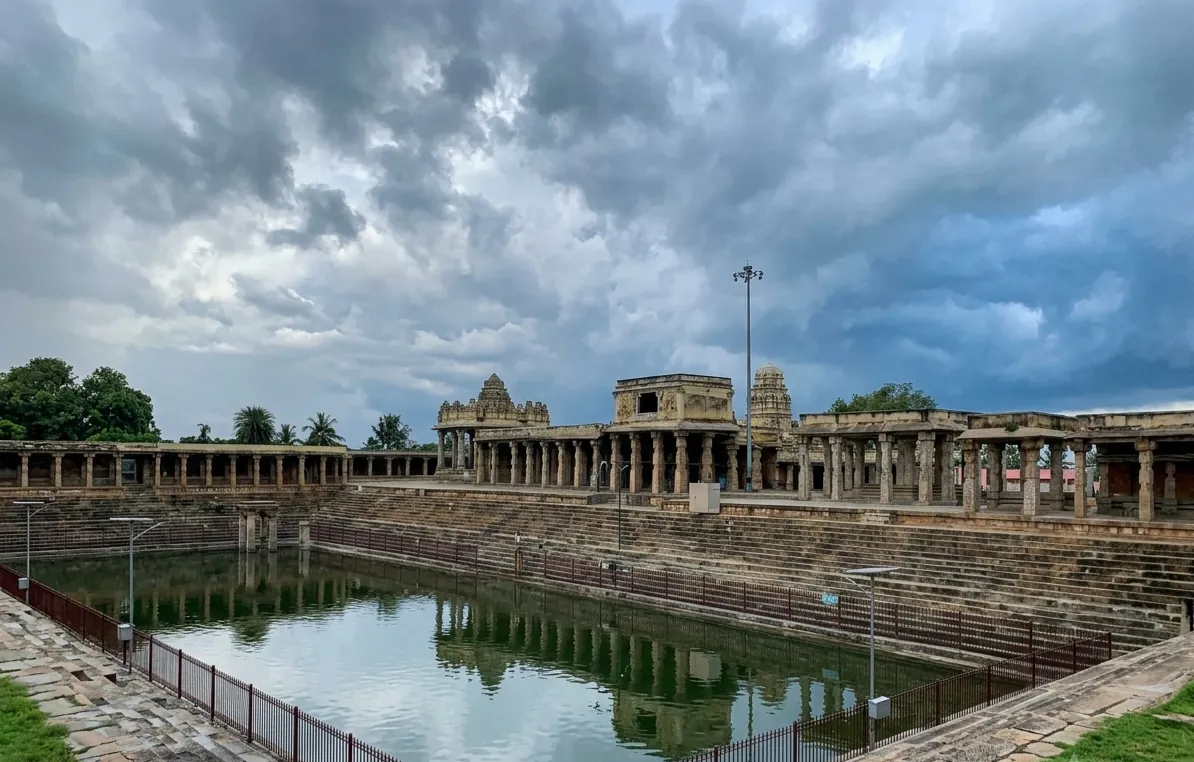
Also the pushkarini, the temple tank
Below the temple · On foot
The town's great tank, stone steps descending the whole way round and pillared mandapas standing along its sides. It is the most photographed thing in Melukote by a distance, and film crews have used it for decades.
The morning light falls across the temple side of the water. Bathing and washing are not permitted.
Akka-Tangi Kola
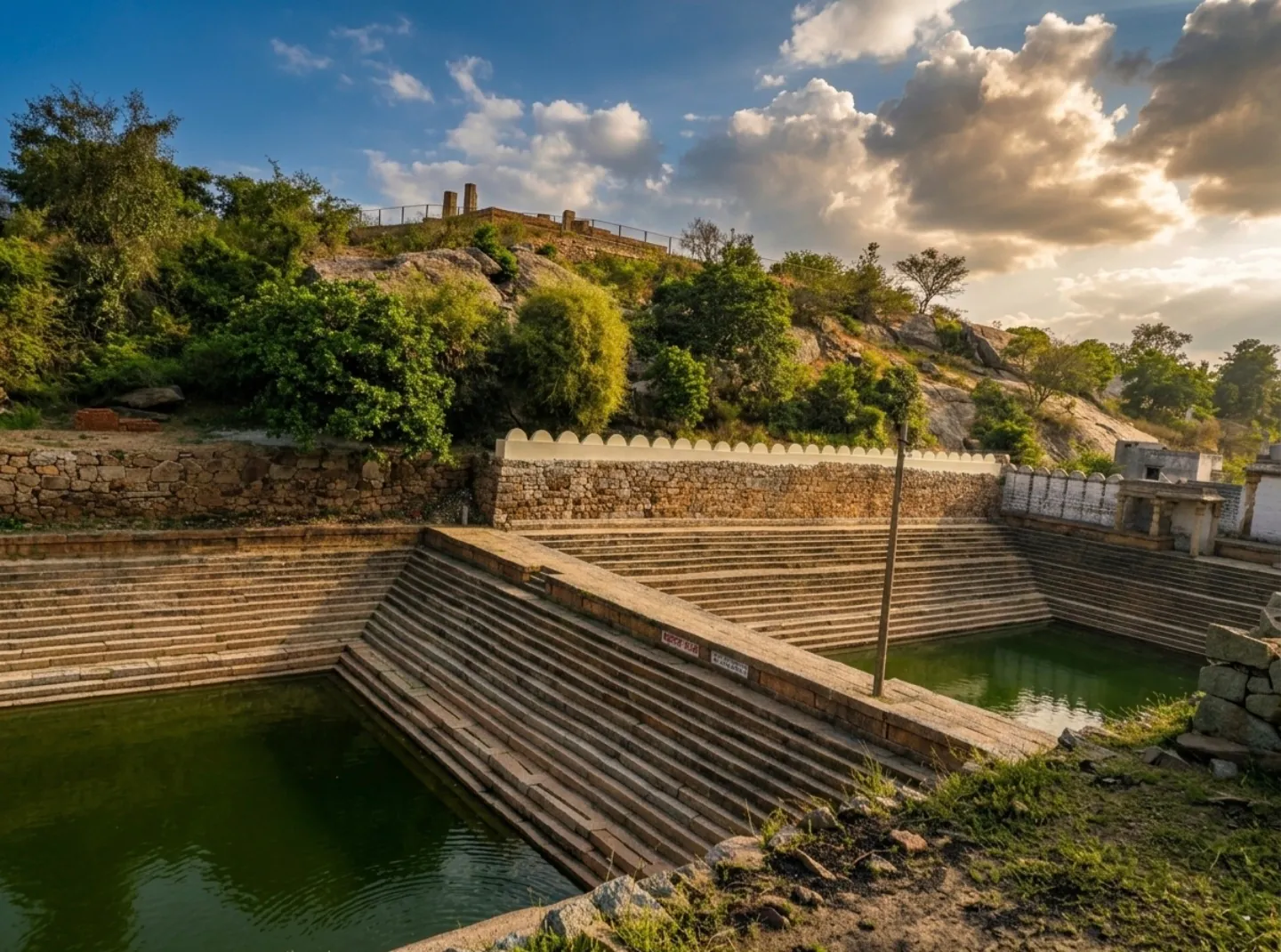
Also the sister ponds
A short walk from the temple · On foot
Two tanks set side by side and named for two sisters — akka the elder, tangi the younger. The water of one is brackish and of the other sweet, and it is the sweet one the temple draws from. Both are stepped on every side, and a stone mantapa stands over the far end.
The shortest of the walks out of the town. Quiet at most hours, though the children of the town swim here when the water is up after rain.
Raya Gopura
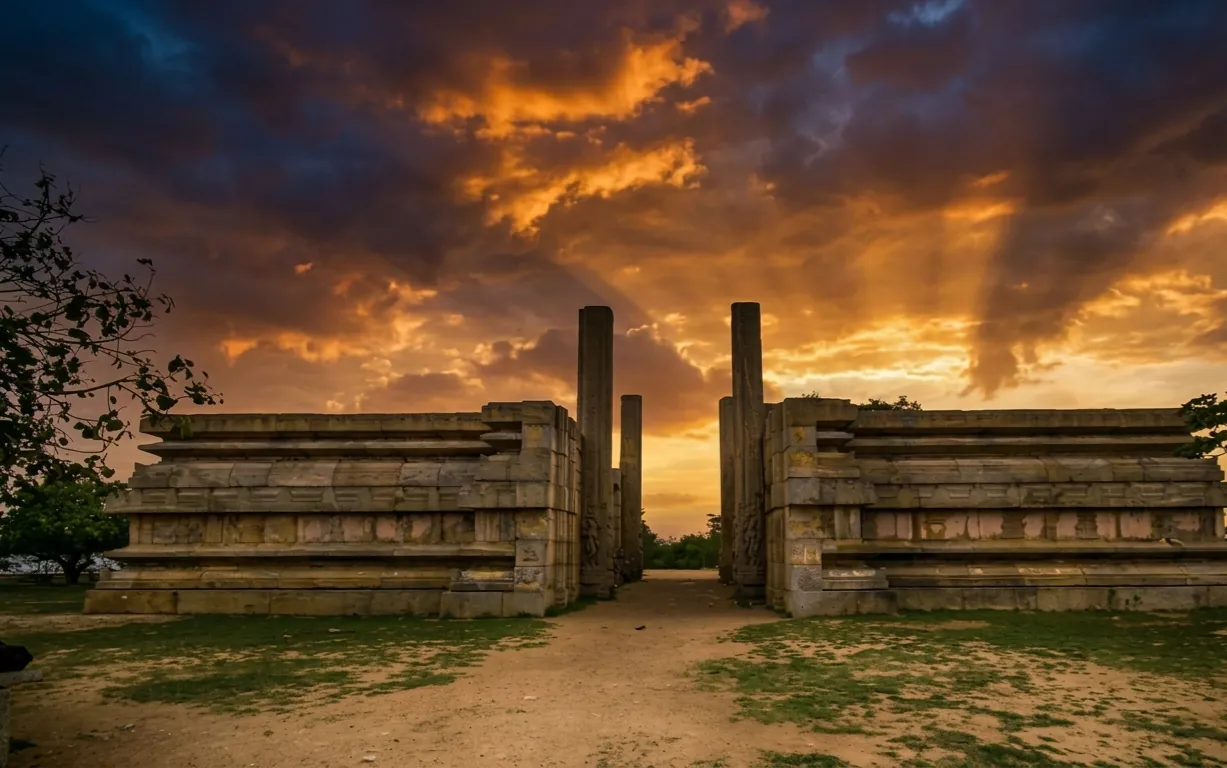
Also the Gopalaraya gateway
A few hundred metres out of town · A short walk, or a two-minute drive
A gateway that was never finished: four tall carved pillars on a platform, with nothing above them. It is attributed to a Vijayanagara commander in the sixteenth century, and the local telling is that it was to have gone up in a single night. It has stood as it was left for four hundred years.
Open ground with no shade whatsoever. Come in the last hour of light — the sun through the pillars is what people drive out for.
The Sanskrit institutions
Also the Academy of Sanskrit Research, and the old college
In the town · On foot
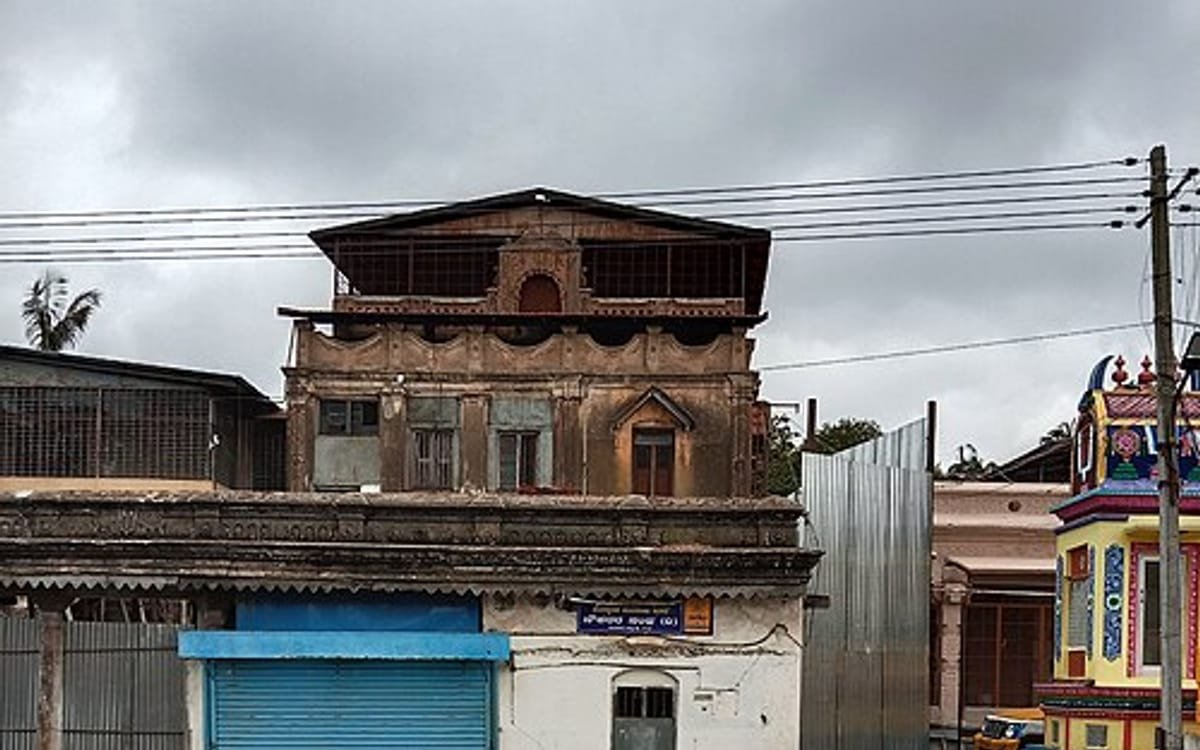
Sanskrit has been taught in Melukote without a break for a very long time. The research academy holds thousands of palm-leaf manuscripts and a large printed library, and the Sanskrit college in the town was founded in the 1850s and is held to be the oldest of its kind in the state.
These keep office hours on working days, not temple hours — a weekend visit finds the doors shut.
A short drive
Just outside the town
All three want a vehicle. The farm will take as long as you give it, Dhanushkoti about half an hour once you are there, and the sanctuary a morning arranged in advance.
Srisha
A short drive from the town · By road
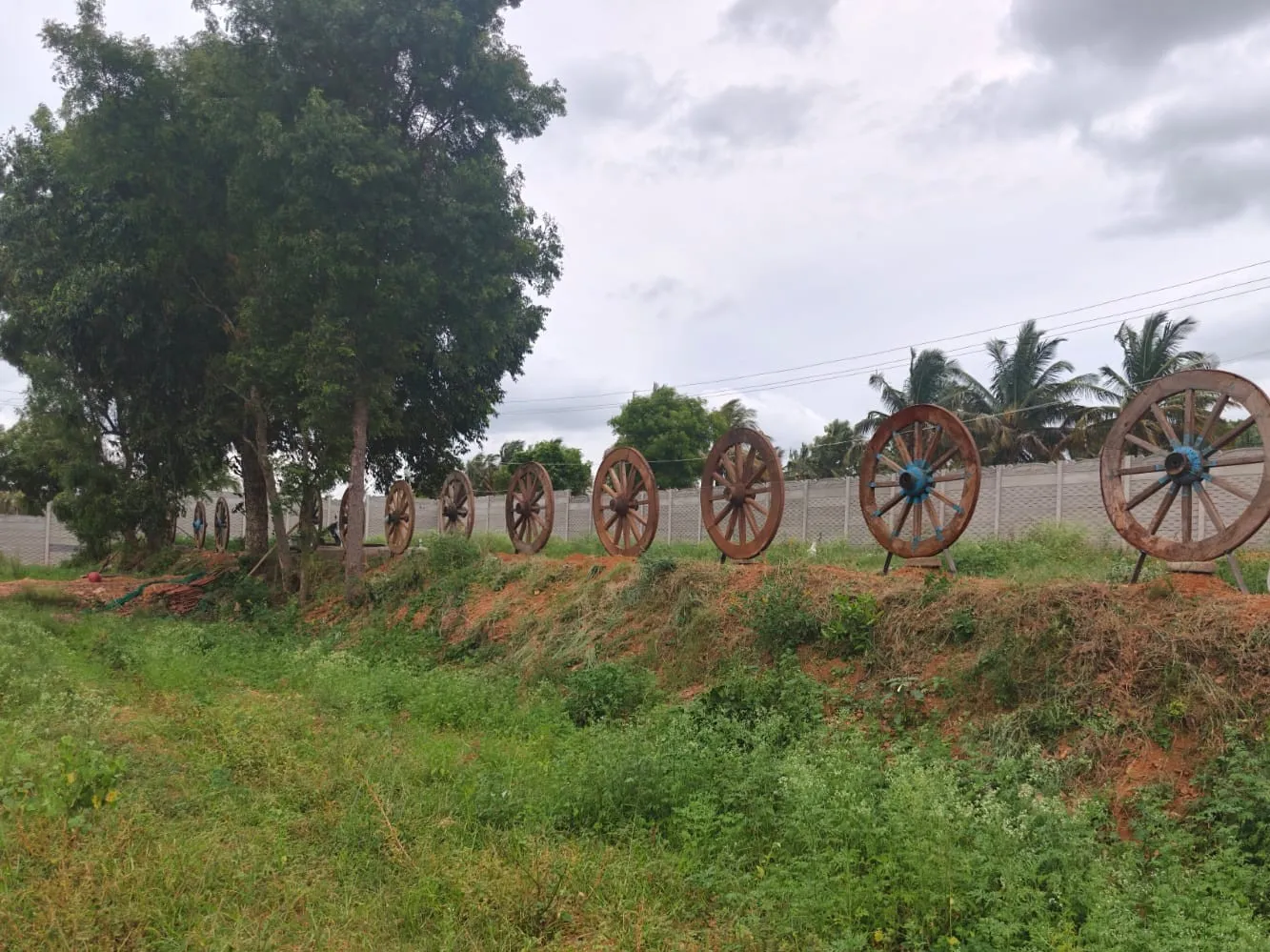
A working farm that opens its land to visitors for agri-tourism. The day is spent on the plots rather than looking at them from a path: how the crop is actually grown, what the season is doing, and a meal made from what comes off the land. It is the one thing around Melukote that is not a temple or a rock, which makes it the answer for a family travelling with children.
Ring ahead rather than turning up — what there is to see, do and pick changes with the season.
Dhanushkoti
Also Dhanushkodi tirtha — not the one in Tamil Nadu
About 3 km east · Drive, then a scramble up rock
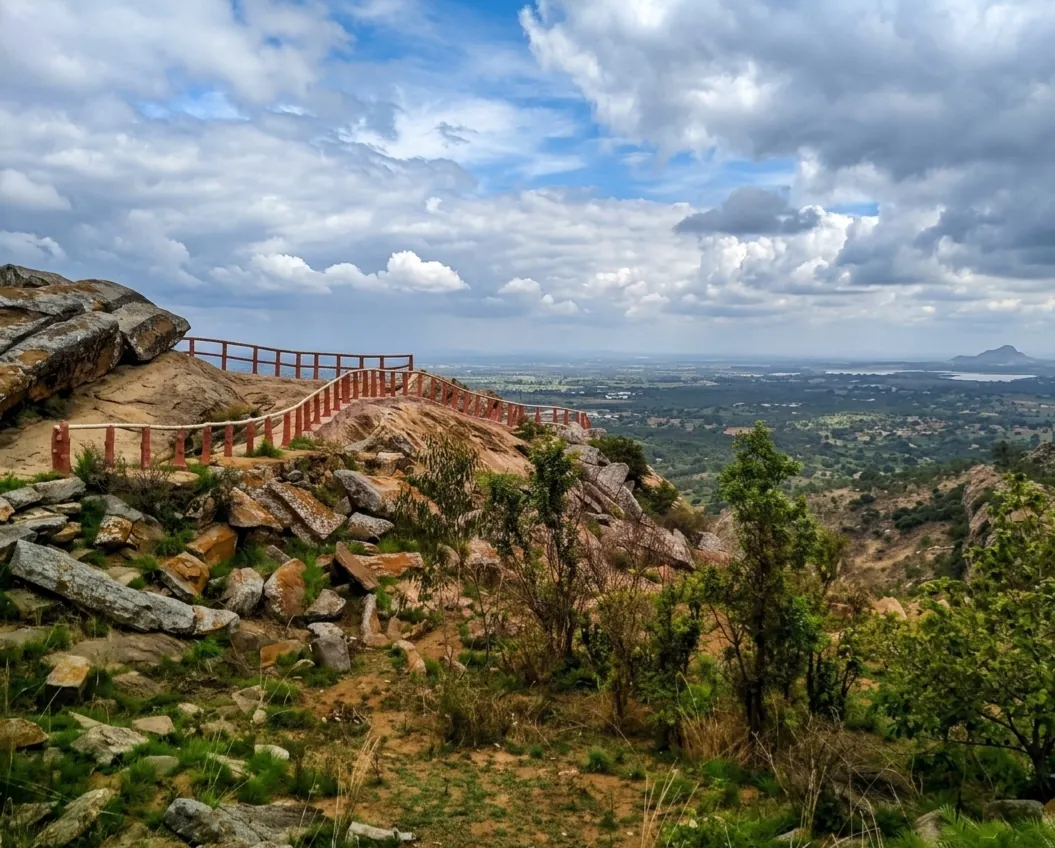
A cleft in the rock that tradition holds Rama opened with an arrow to draw water for Sita, with a small shrine and footprints cut into the stone beside it. The spring there is said never to have failed.
The widest view anywhere around Melukote, and far emptier than the hill. Wear shoes you can climb in, and leave it alone in the wet.
Melukote Temple Wildlife Sanctuary
Also the Narayanadurga and Mudibetta blocks
The scrub around the town · By road, with the forest department's leave
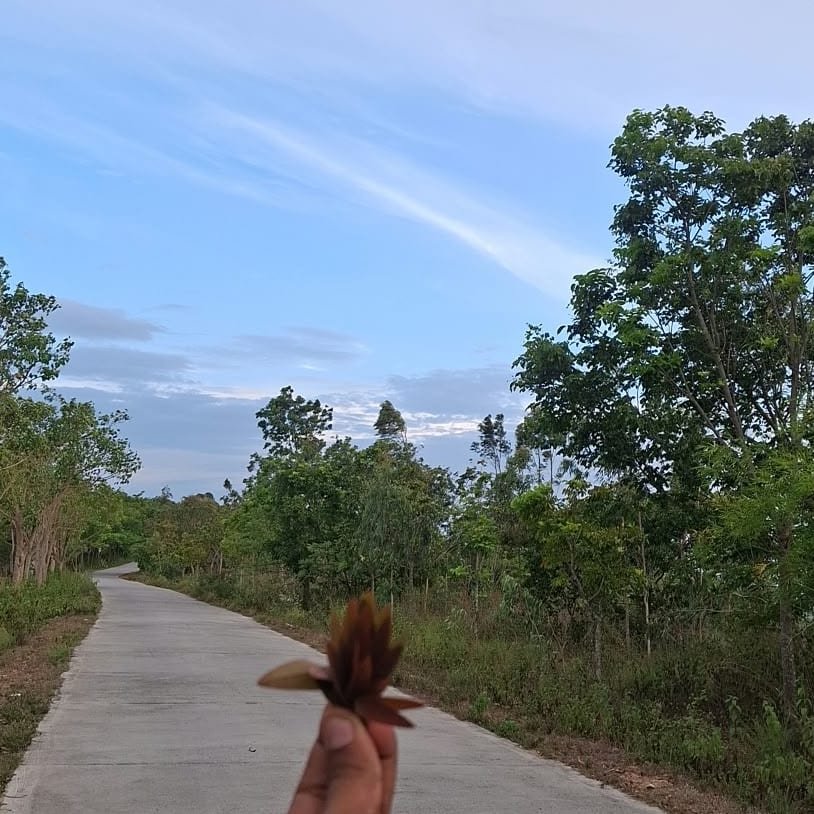
Some fifty square kilometres of dry scrub and bare rock in two separate blocks, notified in 1974 to give the Indian wolf a refuge. Leopard and bonnet macaque are here as well, and close to two hundred species of bird.
This is protected forest. Go with someone who knows the tracks, and do not walk in alone.
Half a day
Worth the longer drive
Thondanur is where Sri Ramanuja is held to have lived for some twelve years before he came up to this hill, and it is the one trip out that deserves a whole afternoon.
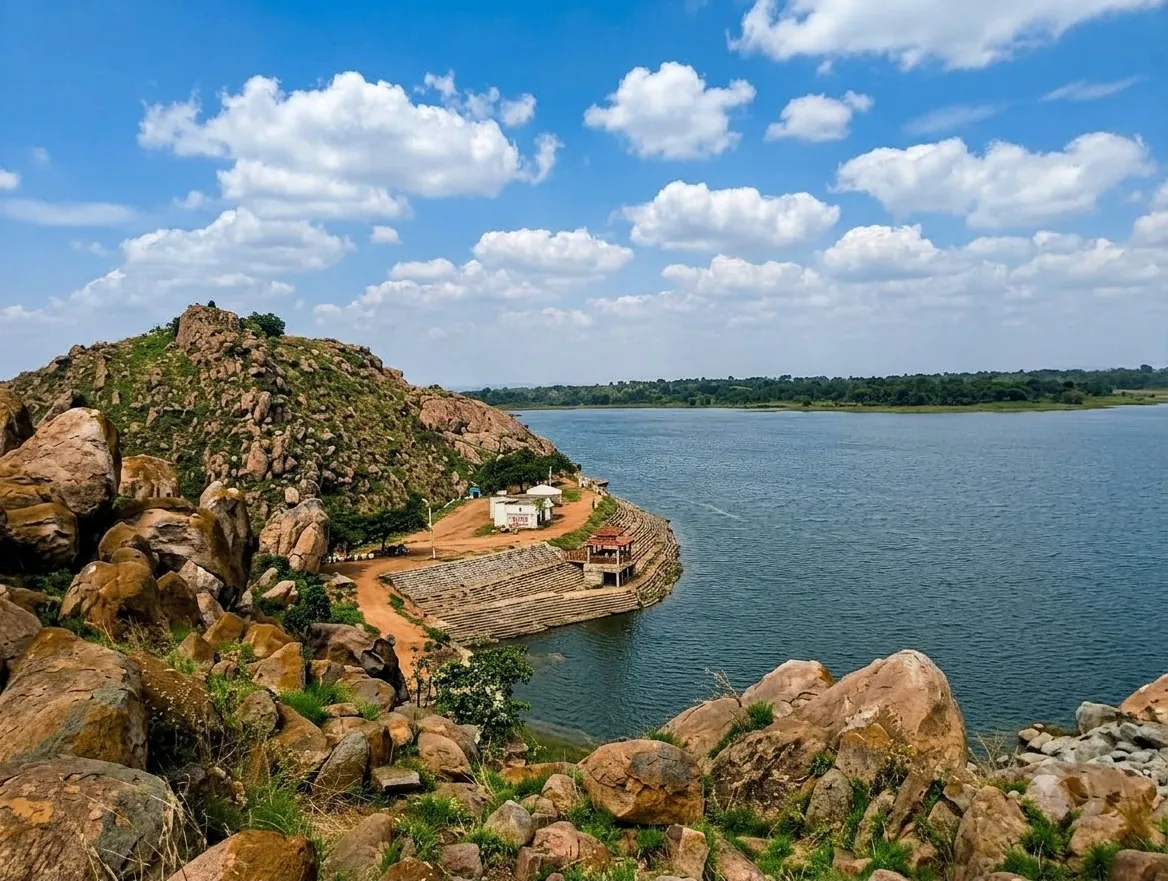
Thonnur Lake
Also Tonnur Kere, Moti Talab
About 20 km — half an hour · By road
An enormous tank held between low hills, and part of the twelfth-century waterworks Sri Ramanuja is remembered for in these villages. A figure of him stands on the bank looking out over it. People drive from Mysuru for the sunset here.
The banks are unmade and the water goes deep very close in. Keep well back from the edge, and do not swim.
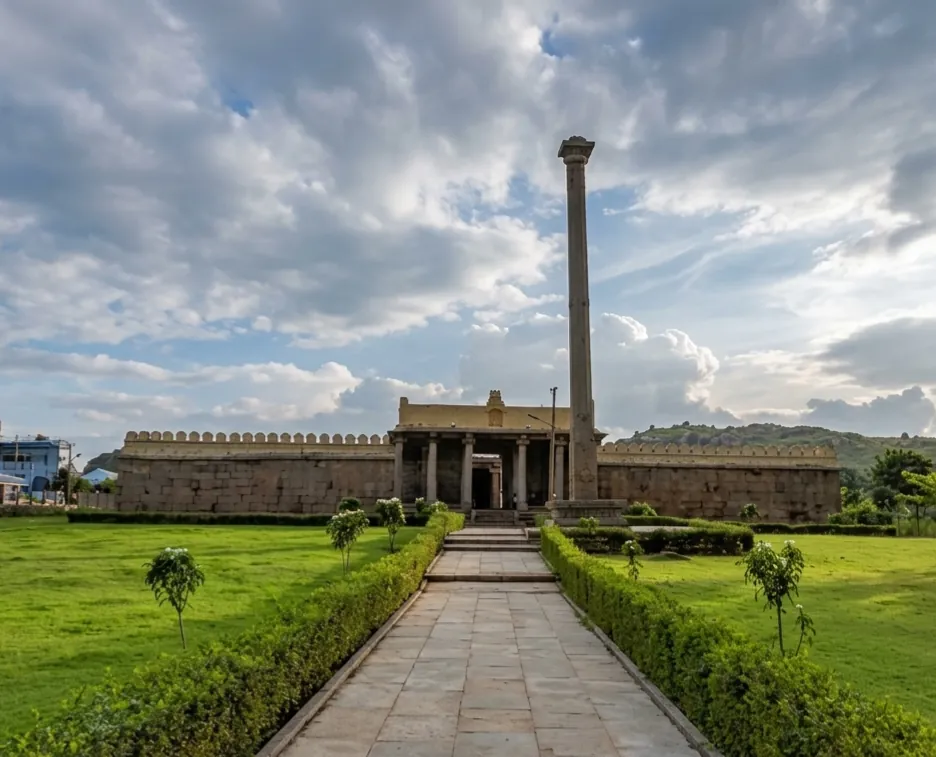
The temples at Thondanur
Also Sri Nambhi Narayana and Venugopalaswamy, at Thonnur
About 20 km — beside the lake · By road
The village keeps old temples within a few minutes of one another. The Nambi Narayana temple has been restored by the Archaeological Survey and is the best kept of them, with long pillared corridors around the shrine; the Venugopala temple opposite is grander in scale and much the worse for it, its frescoes going.
The restored temple keeps posted hours. Do these and the lake together — they are minutes apart, and neither fills an afternoon alone.
Making a day of it
Ordering the day
No clock times, because they would be wrong for you. Four things constrain the day whatever hour you arrive — the sanctum closes at one, the hill temple does not open until two hours after it, the rock is unbearable in the middle of the day, and Thonnur is half an hour the other way. This order follows from those.
From half past seven
The sanctum first, then down to the water
Cheluvanarayana opens earliest and the first hour is the coolest and the emptiest of the day. Come out and walk down to the kalyani while the light is still low across it, and on to the sister ponds from there. Both are minutes away on foot and neither asks for long.
- The Kalyani
- Akka-Tangi Kola
From half past nine
Up the hill while it is still bearable
The hill temple opens two hours after the sanctum, which is precisely why it cannot be the first thing you do. Drive to where the road stops and climb from there. Allow the better part of two hours for the climb, the darshana and the view, and carry water up with you — there is none on the steps.
- Yoga Narasimha Temple
One until four
The hours to stay off the rock
The sanctum is shut and the stone is punishing, so this is not time lost — it is the only stretch of the day when the town is better than the hill. Eat: the puliyogare is what Melukote is known for and the stalls around the temple sell it through the afternoon. If it is a working day, the Sanskrit academy and the old college are open, and they are indoors. With children, the better answer to this hour is out of the town altogether — Srisha Farms is a short drive, it is shade and ground to run on, and none of it depends on the temple being open.
- The Sanskrit institutions
- Srisha
From four, as the light goes
The open ground, in the last of the sun
Neither of these has a scrap of shade and both are at their best late — the gateway for the sun coming through the pillars, the rock above the spring for the view once the glare is off it. They are minutes apart by road, and half an hour each is enough.
- Raya Gopura
- Dhanushkoti
The same hour, half an hour away
Thonnur — and the choice you have to make
This is the step to be honest about. Thonnur lies half an hour in the other direction, and its sunset is the same hour as the low sun on the gateway; one evening does not hold both. If you choose Thonnur, take the temples first while they still keep their posted hours and the lake for the last of the light — then start back the moment it has gone, because none of that road is lit.
- Thonnur Lake
- The temples at Thondanur
- Only have a morning? Take the first two steps and stop. The sanctum, the two tanks and the hill are the kshetra itself; everything after them is the country around it.
- The wildlife sanctuary is not a stop on this day at all. It is protected forest with no gate and no counter — arrange it with the forest department beforehand and give it a morning of its own.
- At the weekend and on public holidays the sanctum keeps longer hours at both ends and the hill is busier. The order holds; everything in it simply takes longer.
Before you set out
- Almost nothing here has a gate or a ticket counter. The temples keep hours; the rest is open ground and open all day.
- The rock is bare and holds heat. From about ten in the morning until four the climbs are punishing in summer — keep the middle of the day for the town.
- Monkeys are everywhere on the hill and on the steps. Carry food in a closed bag, and never hold anything out to them.
- Carry water. There is drinking water at the temple and very little of it anywhere else on this list.
- Melukote's puliyogare is famous well past this district, and the small stalls and messes around the temple sell it through the day, along with sweet pongal and the spice powder it is made from. It travels well, and most people carry some home.
- None of the sites outside the town are lit. Stay for the sunset at Thonnur by all means, but start back as soon as it is over — the roads are narrow and dark.
Keep reading