Our activities
Temple Pratishtha — Vastu and Consecration
Vastu guidance for a temple being built, and the pratishtha that puts it into worship — both to the Agama.
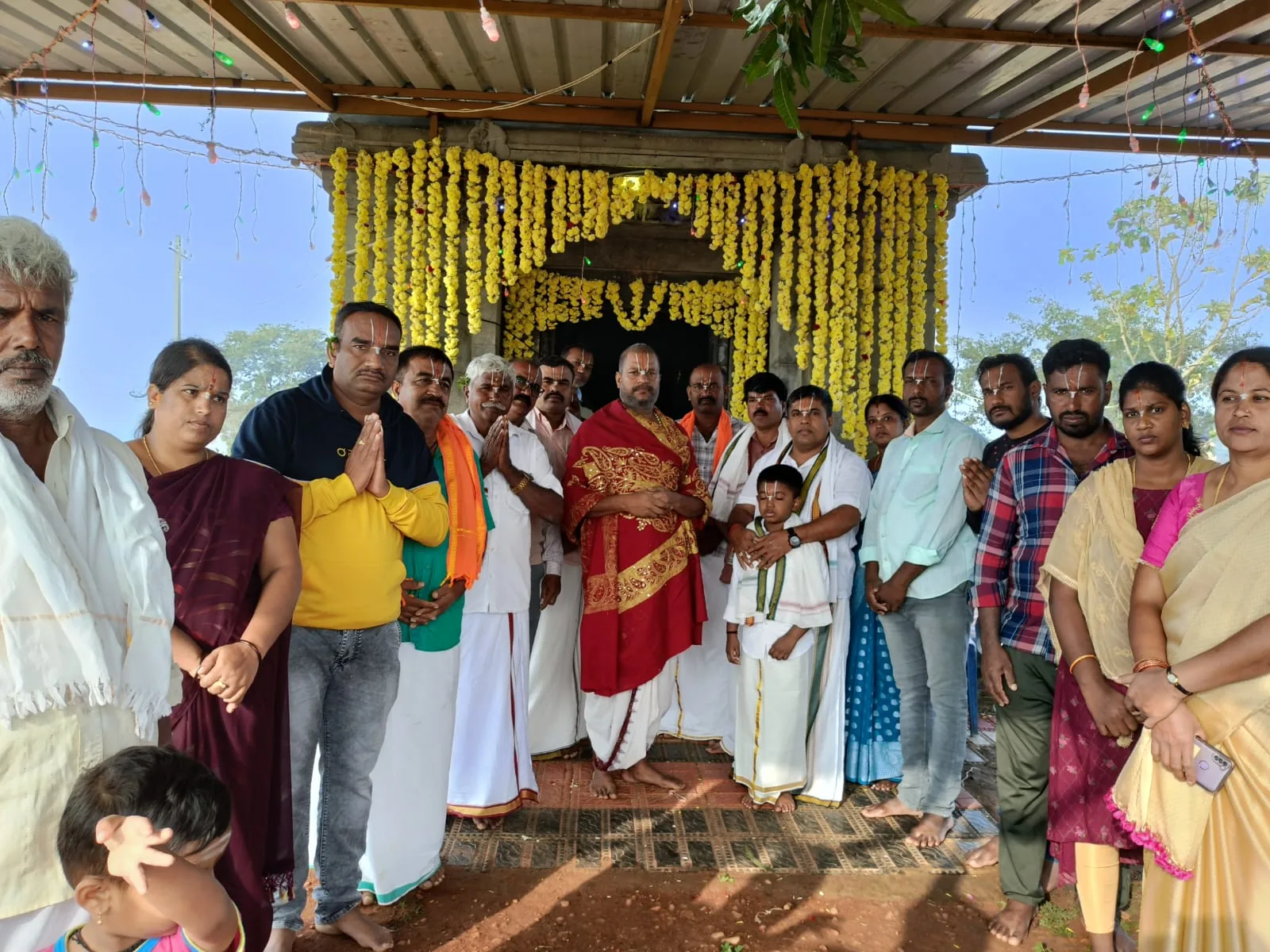
What this work involves
A temple is not a building that a deity is placed in afterwards. The Agama treats the ground, the proportions, the sanctum and the murti as one thing, decided together and in a fixed order.
Which is why a temple needs somebody who knows that order before the foundation is dug. Both halves of the work are asked of this house: guidance while a temple is planned and built, and the pratishtha that brings it into worship at the end.
Before the foundation
The guidance begins at the site — which ground will take a temple, and how it is to be oriented. Then the vastu purusha mandala laid over it, where the garbhagriha — the sanctum itself — falls, and how the tower above it follows from that one decision.
This is Devalaya Vastu and Prathima: the part of the Agama that governs building and iconography, and the body of rule a sthapati — the temple's architect — works to. Read early it costs nothing. Read late it is a list of things that can no longer be corrected.
And again, twelve years on
The ashtabandhana holding a murti to its peetha lasts about twelve years, after which a temple is consecrated afresh. The presence is drawn into a kalasha, worship continues in a temporary balalaya while the repair is done, and it is invoked back at the close.
Whose tradition this is
Ramanuja restored temples the length of India and founded the Pancha Narayana temples of Karnataka. At Melukote (Melkote) it was he who consecrated Sampatkumara.
The houses he appointed here were given the running of this temple under him, and their appointment is set down in the Paramapurusha Samhita — a Pancharatra Agama text, and the tradition these rites are conducted from.
At a glance
- Vastu guidance from the site onward, before the foundation is dug
- Orientation, proportion, and where the garbhagriha falls
- Bhumi pooja, shilanyasa and garbhanyasa
- Netronmilana, prana pratishtha and ashtabandhana
- Mahasamprokshana over the vimana and the gopura
- Ashtabandhana renewed, and the temple consecrated again, about every twelve years
- Conducted to the Agama the temple itself keeps
- In the tradition of Ramanuja, who founded the Pancha Narayana temples of Karnataka
Arranging a pratishtha
Telephone early, whether the temple is being built now or is due for its ashtabandhana. A date has to be found, and the vastu half is worth having before the walls go up.
The sequence
In this order
Each stage has its day, and none of them can change places with another.
- Bhumi poojaThe ground is asked, before it is broken
- AnkurarpanaNine grains sown and sprouted, to see the site consents
- ShilanyasaThe first stone laid, in its measured place
- GarbhanyasaA pancaloha kalasha set beneath the sanctum floor
- The yaga shalaRaised beside the finished temple for the homas
- Adhivasa and homaKalashas of water charged over several days of fire
- NetronmilanaThe murti's eyes opened, and seen for the first time
- Prana pratishthaBreath given, and the murti becomes the deity
- AshtabandhanaFixed to its peetha with the eight-ingredient paste
- MahasamprokshanaThe charged water carried up over the tower and the gateway
In pictures
What it looks like
Select any photograph to see it full size.
Keep reading
Our other work
Would you like to help?
The gurukulam teaches free of cost and the kitchen serves whoever arrives — both carried entirely by what devotees give.
Give now by UPI or bank transfer, with an 80G certificate if you need one. Or write to the office to sponsor a particular day of annadana, offer time during a festival, or ask what is needed most — those take a date and a person rather than a payment.